
A regional FMCG company working across APAC might manage 200-500 distributors. Each distributor submits claims for promotional activities, requests credit notes, reports sell-through data, and raises disputes — all in different formats, frequencies, and languages.
The brand company needs to validate every claim, reconcile every credit note, consolidate sell-through data into a coherent picture, and manage the financial relationship with each distributor. The tools for doing this, in most companies we've encountered: Excel, email, and heroic individual effort.
The Distributor Management Challenge
Distributor management in APAC is uniquely complex for several reasons:
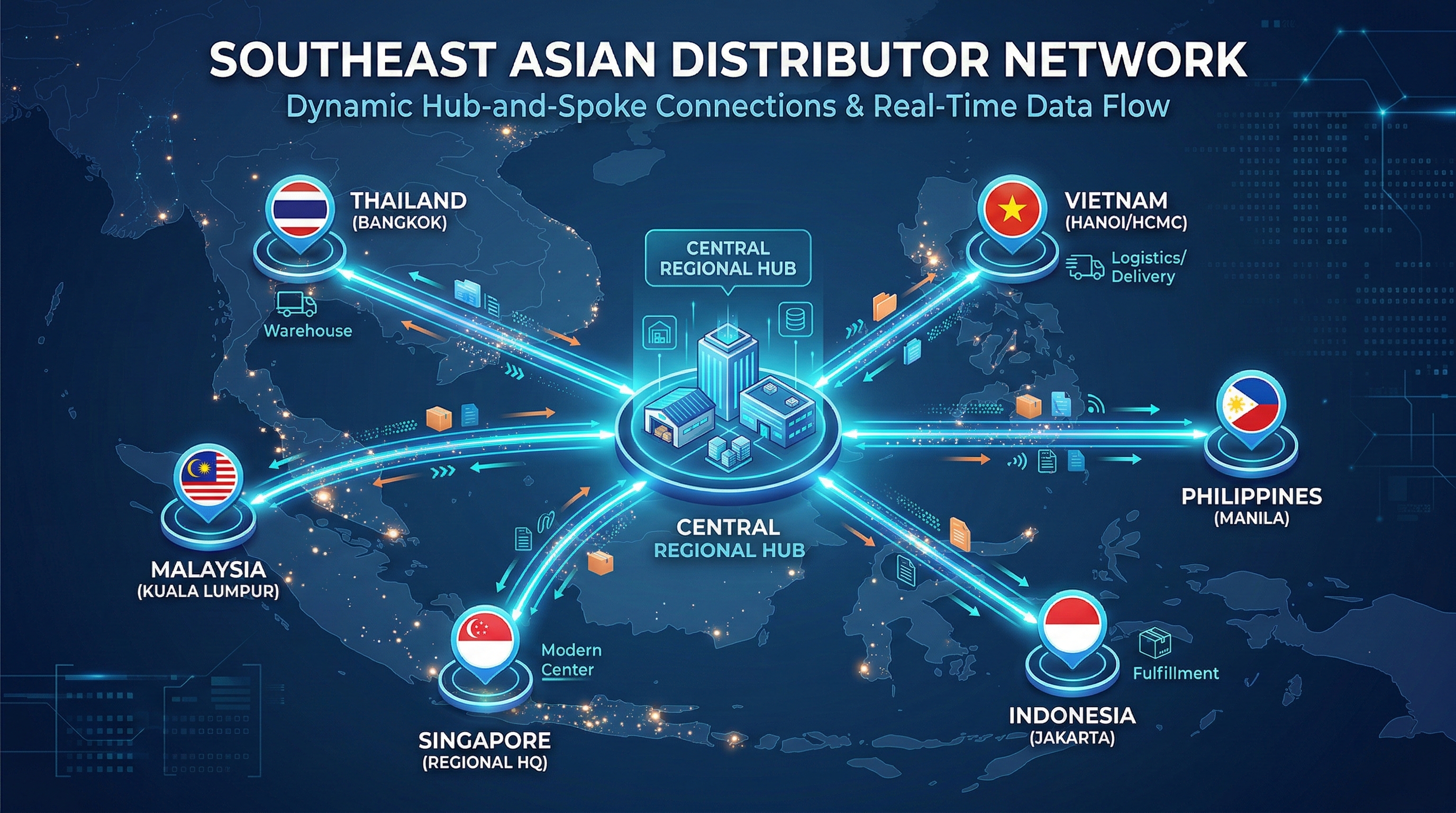
Scale and diversity: A company selling in six APAC markets might have 50 distributors in Indonesia alone (covering different islands and channels), 30 in Thailand, 20 in Vietnam, and so on. Each distributor is a different-sized business with different capabilities, systems, and ways of working.
Claim complexity: Trade promotion claims, damage claims, return credits, volume rebates, market development funds — each has different validation rules, different approval thresholds, and different accounting treatments. And each distributor submits them differently.
Data inconsistency: Sell-in data comes from the company's systems. Sell-out data comes from distributors — when it comes at all. The two rarely reconcile perfectly. Stock levels reported by distributors don't always match what was shipped. Building a true picture of channel performance requires combining data from sources that don't agree.
Language barriers: Communications with Indonesian distributors happen in Bahasa. Thai distributors communicate in Thai. Japanese distributors communicate in Japanese. The brand company's regional team needs to operate across all of these.
Where the Time Goes
In a typical manual distributor management operation:
30% on claim processing: Receiving claims (via email, post, or distributor portal), extracting the relevant data, validating against promotion terms or contract conditions, routing for approval, and processing payment.
25% on reconciliation: Matching sell-in records with distributor stock reports and sell-out data. Investigating discrepancies. Adjusting records.
20% on reporting: Compiling distributor performance reports, channel sales summaries, and management dashboards from data scattered across multiple sources.
15% on communication: Following up on missing data, responding to queries, coordinating visits, and managing the day-to-day relationship.
10% on compliance: Ensuring that distributor arrangements comply with local regulations, contracts are current, and financial controls are maintained.
Of this, roughly 60-70% is data handling — extracting, entering, validating, reconciling, and reporting information. This is the automation opportunity.
What Automation Changes
Claim processing: Distributor claims — whether submitted as invoices, debit notes, or photos of promotional displays — are processed automatically. Document intelligence extracts the claim details, validates against promotion terms, calculates the correct amount, and routes for approval. Processing time drops from days to hours.
Automated reconciliation: Sell-in data from the ERP, sell-out data from distributors (whatever format it arrives in), and stock reports are automatically reconciled. Discrepancies are flagged with context: which distributor, which products, what's the variance, what are the likely causes.
Real-time reporting: Instead of monthly report compilation exercises, distributor performance data is available in real time. Channel managers can see which distributors are performing, which promotions are working, and where inventory is building up — when it matters, not weeks later.
Structured communication: Follow-ups, data requests, and claim responses are automated where possible and structured where human involvement is needed. The system tracks every interaction, so when a distributor asks "what happened to my claim?" the answer is immediate.
The ROI Multiplier
The direct ROI of distributor management automation is the time saved on data handling. But the indirect ROI is larger:
Better promotion decisions: When claim data is available in real time, trade marketing teams can adjust promotions during the promotion period instead of analysing results after the fact.
Fewer disputes: When claims are processed faster and more accurately, distributor relationships improve. Fewer disputes, fewer credit note corrections, less management time spent on relationship repair.
Channel visibility: When distributor data is consolidated and reconciled automatically, commercial teams have a real picture of channel performance — enabling better territory planning, inventory management, and market investment decisions.
The cost of managing distributors manually isn't just operational inefficiency. It's commercial blindness.