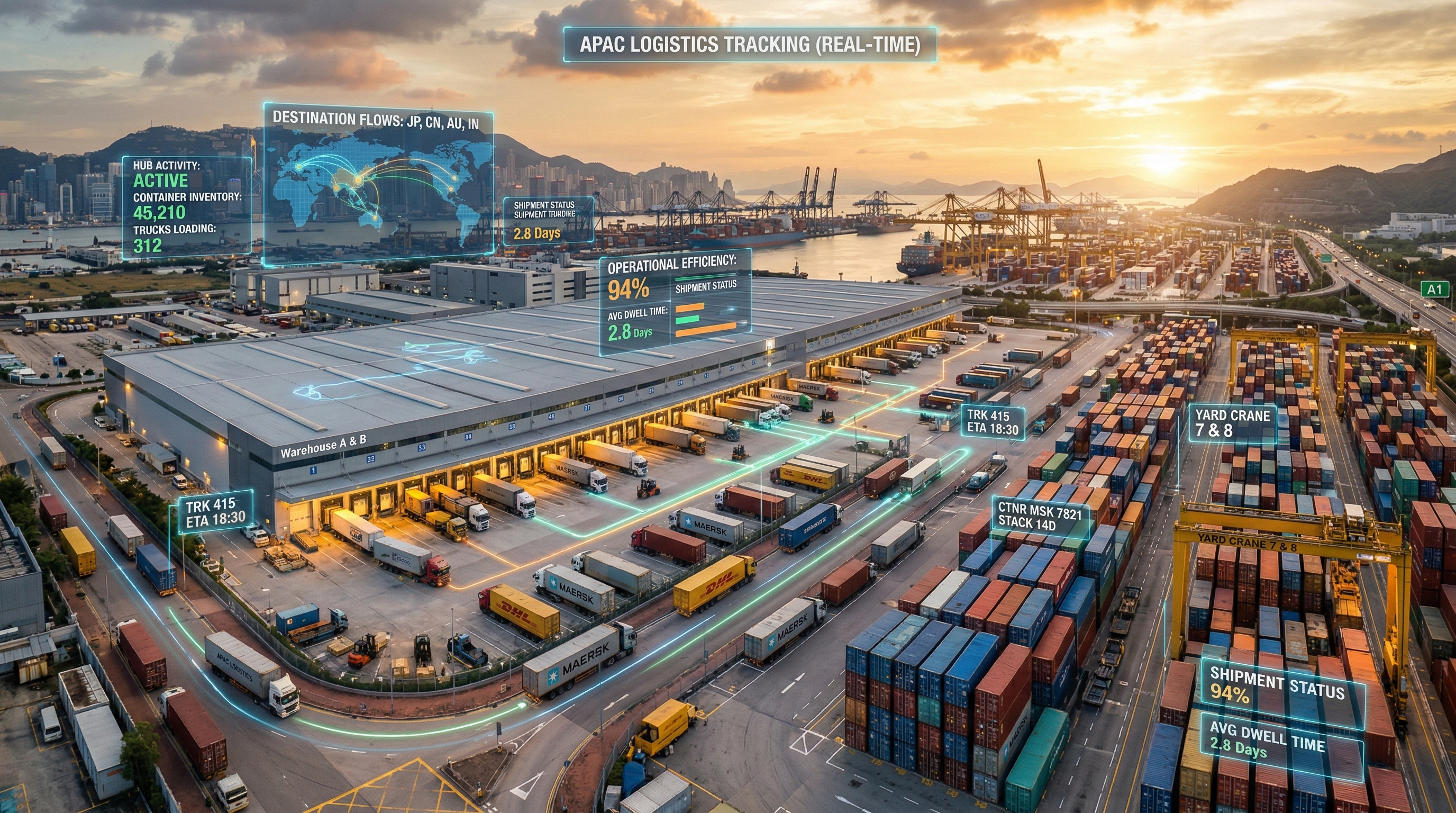
A single international shipment generates 15-30 documents: purchase orders, order confirmations, commercial invoices, packing lists, bills of lading, certificates of origin, phytosanitary certificates, customs declarations, delivery orders, warehouse receipts, and more.
In most APAC trading companies and logistics operations, these documents are processed manually at each stage of the supply chain. Data is extracted by hand, re-keyed into systems, cross-referenced against other documents by eye, and filed in shared drives or physical folders.
The supply chain visibility revolution of the past decade gave companies dashboards showing where their shipments are. Document intelligence gives them something more valuable: understanding of what their documents mean and what actions they should trigger.
Beyond Track-and-Trace
Supply chain visibility platforms excel at answering "where is my shipment?" They connect to carrier systems, port systems, and warehouse systems to show real-time location and status.
But location is only one piece of the operational puzzle. When a container is delayed at port, the operations team needs to know:
- Which customers' orders are affected?
- Which invoices need adjustment?
- Are there compliance deadlines at risk?
- What's the cost impact of the delay?
- Which downstream processes need to be rescheduled?
This information doesn't live in the visibility platform. It lives in the documents flowing through the supply chain — and in the relationships between those documents.
Document Intelligence for Supply Chains
Document intelligence applied to supply chain operations means:
Automated extraction: Bills of lading, commercial invoices, and packing lists processed automatically — extracting shipment references, line items, quantities, values, and compliance-relevant data regardless of format or language.
Cross-document validation: Matching data across related documents. Does the commercial invoice match the packing list? Do the quantities on the delivery order match the bill of lading? Are the HS codes consistent across the certificate of origin and customs declaration?
Exception detection: Identifying discrepancies before they become problems. A weight mismatch between the bill of lading and the packing list might indicate a loading error. A value discrepancy between the commercial invoice and the PO might indicate a pricing issue.
Compliance automation: Validating documents against customs requirements for the destination country. Are all required fields present? Are the formats correct? Are the HS codes valid? Is the certificate of origin acceptable?
Document assembly: For customs brokers and freight forwarders, automatically assembling the complete document package for a shipment — pulling from multiple sources, validating completeness, and flagging missing documents before they cause delays.
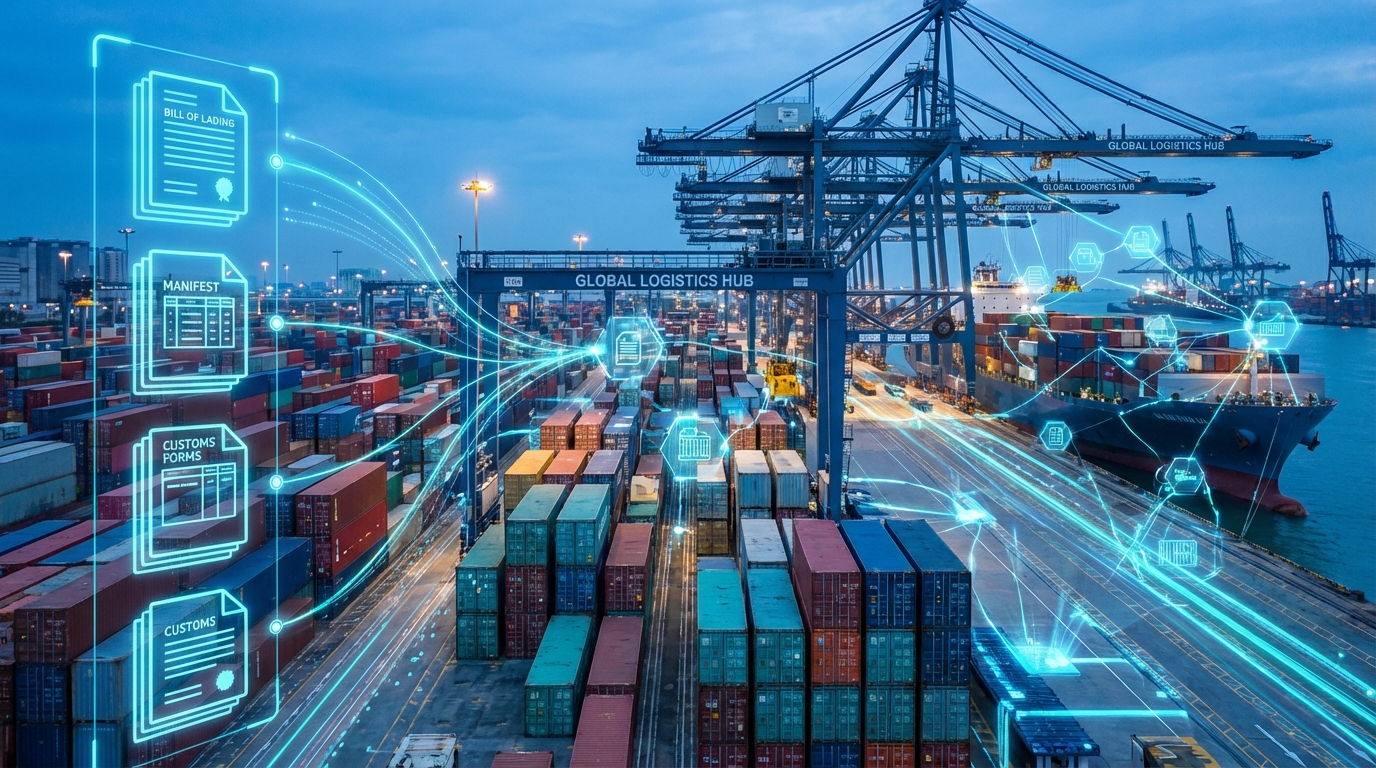
The APAC Trade Corridor Complexity
APAC's major trade corridors — China-ASEAN, Japan-ASEAN, intra-ASEAN, and APAC-global — involve some of the world's most document-intensive trade processes. The reasons are structural:
Regulatory diversity: ASEAN alone comprises 10 countries with 10 different customs regimes, 10 different documentation requirements, and 10 different electronic filing standards (where they exist).
Language diversity: Trade documents flow in English, Chinese, Japanese, Korean, Thai, Vietnamese, Bahasa, and more — often multiple languages within a single document set.
Format diversity: Despite harmonisation efforts, trade document formats vary significantly across countries, industries, and individual companies. A bill of lading from a Chinese shipping line looks different from one issued by a Japanese carrier.
This diversity makes manual processing error-prone and slow. It also makes intelligent document processing disproportionately valuable — because the complexity it handles is the complexity that breaks manual processes.
From Documents to Decisions
The real value of supply chain document intelligence isn't faster data entry. It's the operational intelligence that structured document data enables:
Cost visibility: When every commercial invoice, freight bill, and customs charge is automatically extracted and linked to the relevant shipment, you can see the true landed cost of every item in real time — not months later when finance reconciles.
Performance measurement: Document processing data reveals operational performance: Which suppliers ship on time? Which routes have the most compliance exceptions? Which customs brokers have the highest first-pass clearance rates?
Risk identification: Patterns in document exceptions can signal emerging risks: a supplier whose invoices are increasingly discrepant, a route where customs delays are lengthening, a product category where compliance requirements are changing.
The supply chain doesn't run on containers and trucks. It runs on documents. Making those documents intelligent makes the entire chain smarter.