
Every APAC operations leader knows the feeling. You've built a solid process for one market, and then you expand to the next one — and discover that everything from tax calculation to invoice formatting to data storage needs to be different.
This isn't a one-time problem. APAC's regulatory landscape is dynamic. Electronic invoicing mandates are rolling out across the region, with different timelines and technical requirements in each market. Tax regimes change. Data residency rules tighten. Reporting standards evolve.
The companies that handle this well don't treat compliance as a checkbox exercise. They build it into their operational architecture. Here's what that looks like in practice.
The Regulatory Patchwork
A quick tour of what "APAC compliance" actually means for enterprises operating across the region:
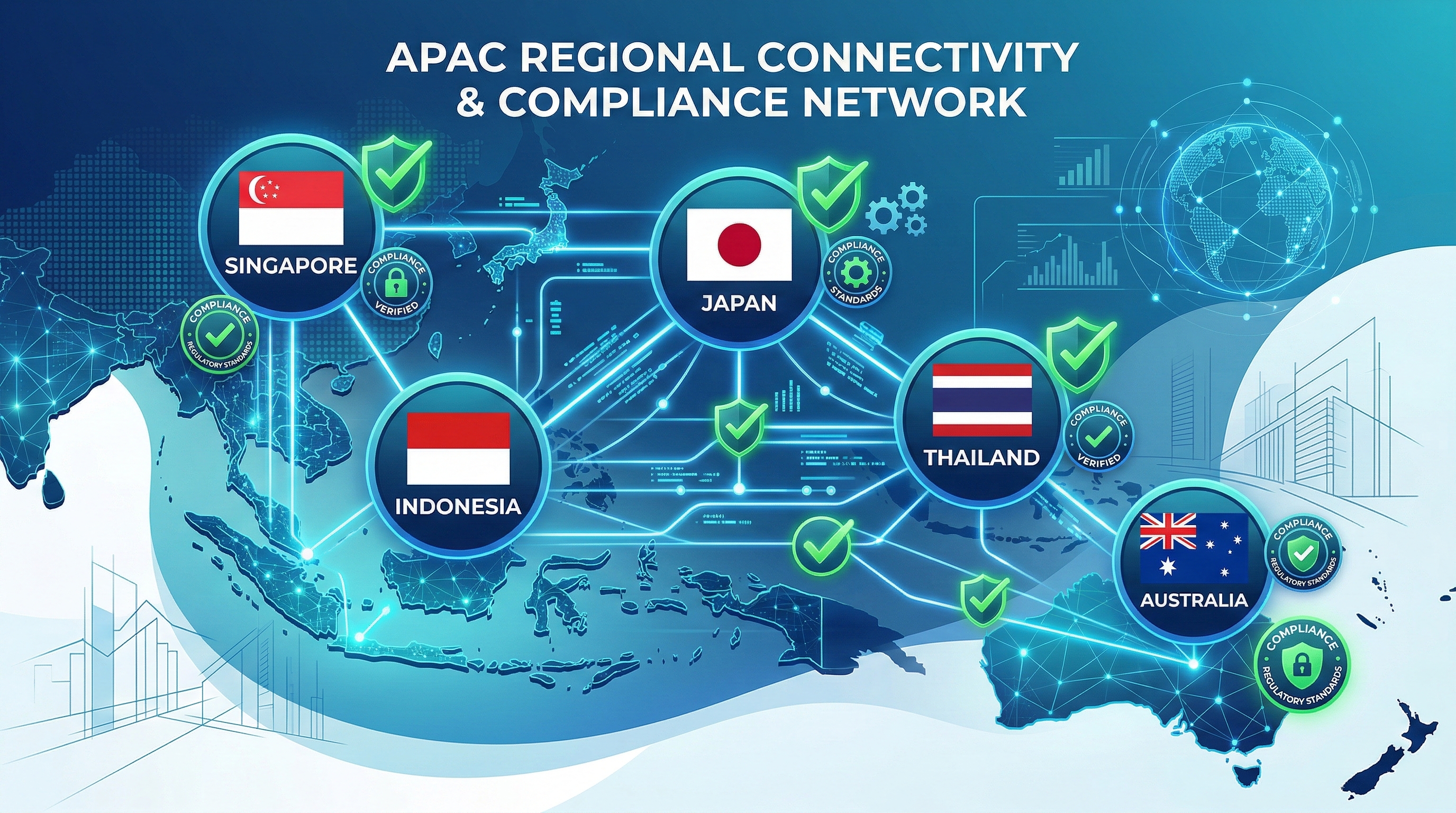
Singapore: GST regime with specific requirements for tax invoice formatting, electronic filing via IRAS, and upcoming e-invoicing mandate alignment with Peppol network. Data protection under PDPA with sector-specific guidelines for financial services (MAS), healthcare, and telecommunications.
Japan: Consumption tax with the qualified invoice system (インボイス制度) requiring specific invoice formats from October 2023. J-SOX compliance for listed companies. Electronic record retention under the amended e-Bunsho law. My Number system for individual and corporate identification.
Indonesia: VAT regime with e-Faktur electronic invoicing mandate. Multi-tier tax structure with different rates for goods and services. OJK regulations for financial services. GR 71/2019 on electronic systems and transactions.
Thailand: VAT system with specific requirements for tax invoices. Revenue Department e-Tax Invoice system. PDPA enforcement strengthening. Bank of Thailand regulations for financial data.
Australia: GST with specific requirements for tax invoices, business activity statements (BAS), and ATO reporting. Privacy Act obligations. ASIC corporate reporting requirements. Industry-specific regulations for financial services (APRA, ASIC), energy, and mining.
Vietnam: VAT with e-invoice mandate (Decree 123). Transfer pricing documentation requirements. State Bank of Vietnam regulations for financial transactions.
Each market has its own timelines, its own technical standards, and its own enforcement posture. And they all change.
Why Manual Compliance Fails at Scale
The traditional approach to multi-market compliance is to have local teams handle local requirements. This works when you operate in two or three markets. It breaks when you operate in six or more.
The problems compound:
Knowledge concentration: Compliance knowledge lives in individual people's heads. When they leave, the knowledge goes with them. When they're on leave, processing stops.
Consistency gaps: Each local team develops its own processes, documentation standards, and exception handling approaches. When a group audit happens, the inconsistency itself becomes a finding.
Reactive posture: Local teams monitor local regulatory changes, but there's no systematic way to assess the impact of a change in one market on operations across the region.
Reporting burden: Every quarter, each local team manually compiles compliance reports. Someone at the regional level manually aggregates them. The result is always late, sometimes inconsistent, and never real-time.
Building Compliance into Operations
The alternative is to treat compliance as an operational capability, not a reporting exercise. This means:
Regulatory rule encoding: Translate compliance requirements into machine-readable rules that can be applied automatically. When an invoice arrives from Thailand, the system knows the Thai VAT rules, validates accordingly, and flags exceptions without human intervention.
Change monitoring: Track regulatory changes across all operating markets systematically. When Indonesia updates its e-Faktur requirements, the system flags which processes and templates need updating.
Audit trail automation: Every document processed, every validation performed, every exception handled — logged automatically with timestamps, actors, and decision rationale. When auditors arrive, the trail is already there.
Cross-border intelligence: When a transaction spans multiple jurisdictions, the system applies the right rules for each leg automatically — withholding tax, transfer pricing documentation, customs declarations, and currency reporting.
The Cost of Getting It Wrong vs. Getting It Right
The cost of compliance failure in APAC is escalating. Regulatory enforcement is tightening across the region, and the penalties are becoming more consequential — not just fines, but operational restrictions, license conditions, and reputational damage.
But the cost of compliance success shouldn't be half your operations team's time. When compliance is built into operational workflows rather than bolted on top of them, it becomes a source of competitive advantage: faster market entry, smoother audits, and more confident commercial decisions.